
Herniated Disc Treatment
Evaluation and treatment for herniated discs causing neck pain, back pain, sciatica, arm numbness, leg pain, and nerve compression symptoms.
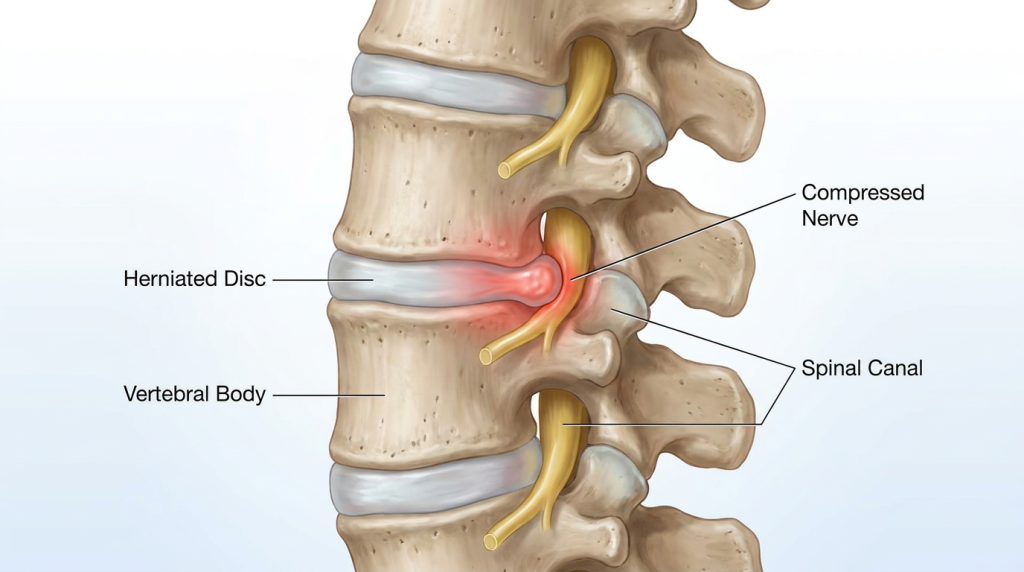
When a herniated disc irritates or compresses a nerve, symptoms can extend far beyond the spine itself. Some patients experience pain traveling into the arm or leg. Others develop numbness, tingling, weakness, or difficulty with everyday activities.
For many people, symptoms interfere with sleep, work, exercise, driving, or simple daily movement. When pain continues despite rest, medication, therapy, or injections, evaluation by an experienced spine specialist can help determine the cause and appropriate treatment options.
Dr. Garges provides herniated disc treatment in Webster, TX for patients throughout Clear Lake, League City, Nassau Bay, Friendswood, Pearland, Pasadena, and the greater Houston area.
How a Herniated Disc Causes Symptoms
Spinal discs act as cushions between the bones of the spine. A herniated disc occurs when disc material extends beyond its normal boundary and irritates nearby nerves.
Symptoms depend on which nerve is affected and where the herniated disc occurs.
- Cervical herniated discs may cause neck pain, shoulder pain, arm numbness, tingling, or weakness.
- Lumbar herniated discs may cause lower back pain, sciatica, leg pain, foot numbness, or weakness.
Not every herniated disc causes symptoms. Many people have disc abnormalities visible on MRI scans without pain or nerve problems. This is why imaging findings must be carefully correlated with physical examination and symptoms.
Common Symptoms of a Herniated Disc
Patients seek evaluation for herniated disc symptoms such as:
- Neck pain or lower back pain
- Sciatica or pain radiating down the leg
- Arm pain, numbness, or tingling
- Leg weakness or foot numbness
- Burning pain between the shoulder blades
- Pain that worsens while sitting, driving, bending, or lifting
- Difficulty sleeping due to pain
- Symptoms affecting work or normal daily activities
Some patients notice symptoms gradually worsening over time, while others experience sudden pain after lifting, twisting, or injury.
Because other spine conditions may cause similar symptoms, accurate diagnosis is important before treatment decisions are made.
Why Patients Choose Dr. Garges for Herniated Disc Evaluation
Patients often arrive frustrated after trying multiple treatments without clear answers.
Dr. Garges focuses on identifying the actual source of symptoms before discussing treatment recommendations. Evaluation includes symptom review, physical examination, neurologic assessment, and detailed imaging interpretation.
Patients frequently choose Dr. Garges because he:
- Takes time to understand symptoms thoroughly
- Personally reviews MRI and imaging studies
- Explains findings clearly and directly
- Evaluates conservative and surgical treatment options carefully
- Has experience treating complex spine conditions
Treatment recommendations are based on symptoms, examination findings, imaging correlation, and overall function — not MRI findings alone.
Conditions Commonly Associated With Herniated Discs
Herniated discs may contribute to several spine-related conditions, including:
- Sciatica
- Cervical radiculopathy
- Lumbar nerve compression
- Degenerative disc disease
- Spinal stenosis
- Neck pain with arm symptoms
- Back pain with leg symptoms
Additional evaluation or treatment may involve:
How Herniated Disc Conditions Are Evaluated
Accurate diagnosis begins with determining whether imaging findings actually match the patient’s symptoms.
| Evaluation Component | Purpose |
|---|---|
| Symptom Review | Identifies pain location, radiation patterns, numbness, weakness, and symptom progression |
| Physical Examination | Evaluates strength, reflexes, sensation, movement, and nerve function |
| Imaging Review | Determines whether MRI findings correlate with symptoms and examination findings |
| Treatment History | Reviews prior therapy, medications, injections, or previous spine treatment |
MRI findings alone do not determine treatment. Some patients have multiple abnormalities visible on imaging, but only one may actually be causing symptoms.
Dr. Garges carefully evaluates which findings are clinically significant before discussing treatment recommendations.
Non-Surgical Herniated Disc Treatment
Many patients improve without surgery.
Conservative treatment may include:
- Activity modification
- Physical therapy
- Anti-inflammatory medication
- Nerve pain medication
- Epidural steroid injections
- Posture and ergonomic adjustments
Some herniated discs improve gradually over time as inflammation decreases and nerve irritation settles.
Treatment plans are individualized based on symptoms, neurologic findings, imaging correlation, and response to previous care.
When Herniated Disc Surgery May Be Considered
Surgical treatment may become appropriate when symptoms persist despite conservative treatment or when nerve compression causes progressive neurologic problems.
Surgical evaluation may be considered for:
- Persistent arm or leg pain
- Progressive weakness
- Significant nerve compression
- Difficulty walking or performing normal activities
- Symptoms severely affecting quality of life
Dr. Garges evaluates whether symptoms, examination findings, and imaging clearly support surgical treatment before discussing procedures.
Not every herniated disc requires surgery. The goal is identifying the treatment approach most appropriate for the individual patient.
Herniated Disc Treatment in Webster, TX
Dr. Kim J. Garges provides herniated disc evaluation and treatment in Webster, TX for patients throughout:
- Clear Lake
- League City
- Nassau Bay
- Friendswood
- Pearland
- Pasadena
- Houston
As a board-certified orthopedic spine surgeon with fellowship training at the San Francisco Spine Institute and prior experience as chief of spinal surgery at UTMB, Dr. Garges evaluates both common and complex spine conditions.
Schedule Your Herniated Disc Evaluation
If neck pain, back pain, sciatica, arm numbness, tingling, weakness, or radiating symptoms are not improving, evaluation by an experienced spine specialist can help determine the cause and appropriate treatment options.
An accurate diagnosis is the foundation of effective herniated disc treatment.
Schedule your herniated disc evaluation with Dr. Kim J. Garges in Webster, TX.