
Cervical Spine Treatment
Experienced cervical spine evaluation and treatment for neck pain, arm numbness, nerve compression, and cervical spine conditions in Webster, TX and the greater Houston area.

Neck pain, arm numbness, tingling, or weakness may indicate a cervical spine condition affecting the nerves in your neck.
For some patients, symptoms begin as stiffness or discomfort in the neck. Others notice pain radiating into the shoulder blade, arm, hand, or fingers. In some cases, weakness or numbness starts interfering with work, sleep, driving, or daily activities.
When symptoms continue despite rest, medication, or therapy, evaluation by an experienced spine specialist can help determine the cause and guide the next step.
Dr. Kim J. Garges provides cervical spine treatment in Webster, TX for patients throughout Clear Lake, League City, Nassau Bay, Friendswood, Pearland, Pasadena, and the Houston area. Treatment recommendations are based on symptoms, physical examination findings, imaging review, and overall function.
Many cervical spine conditions improve with conservative treatment. Others may require additional evaluation or surgical consideration when symptoms become more severe or progressive.
Signs of Cervical Nerve Compression
The cervical spine contains nerves that travel from the neck into the shoulders, arms, and hands. When these nerves become compressed or irritated, symptoms may appear far from the neck itself.
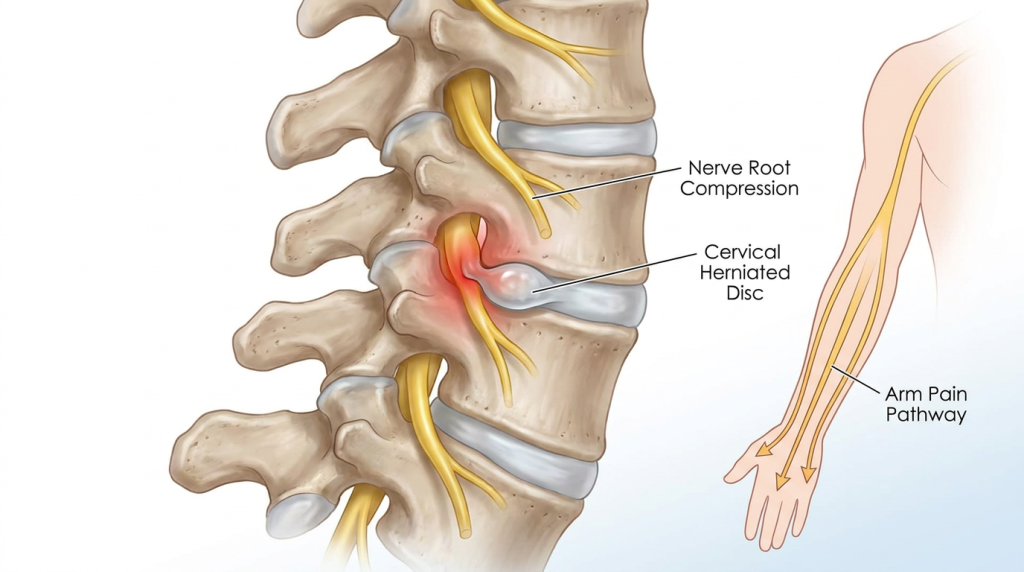 Patients commonly seek evaluation for:
- Persistent neck pain
- Pain radiating into the shoulder or arm
- Numbness or tingling in the fingers or hand
- Weakness when gripping or lifting objects
- Burning pain between the shoulder blades
- Difficulty turning the head
- Symptoms affecting sleep or work activities
Some patients notice symptoms worsening while driving, working at a computer, lifting, or looking down for extended periods. Others experience progressive symptoms that have not improved with conservative care.
Because cervical nerve compression can mimic shoulder, arm, or peripheral nerve problems, accurate diagnosis is important before treatment decisions are made.
Why Patients Choose Dr. Garges for Cervical Spine Evaluation
 Patients often arrive frustrated after dealing with persistent symptoms, unclear answers, or treatments that have not helped.
Dr. Garges focuses on identifying the actual source of symptoms before discussing treatment options. His evaluation process combines clinical examination, symptom analysis, and imaging interpretation to determine whether the cervical spine is truly responsible for the patient’s condition.
Patients frequently choose Dr. Garges because he:
- Takes time to understand symptoms thoroughly
- Personally reviews MRI and imaging studies
- Explains findings clearly and directly
- Evaluates both conservative and surgical options
- Has experience treating complex cervical spine conditions
Patients are not rushed toward surgery. Recommendations are based on the severity of symptoms, neurologic findings, imaging correlation, and response to conservative treatment.
How Cervical Spine Problems Are Evaluated
Accurate cervical spine treatment begins with understanding which structure is causing the symptoms.
Dr. Garges performs a detailed evaluation that may include:
| Evaluation Component | Purpose |
|---|---|
| Symptom Review | Determines pain location, radiation pattern, numbness, weakness, and symptom progression |
| Physical Examination | Evaluates neck motion, strength, reflexes, sensation, and neurologic function |
| Imaging Review | Correlates MRI, CT, or X-ray findings with symptoms and examination results |
| Treatment History | Reviews prior therapy, medications, injections, and response to treatment |
MRI findings alone do not determine treatment. Many patients have cervical disc abnormalities on imaging without symptoms. Dr. Garges evaluates whether imaging findings actually match the patient’s clinical presentation.
If additional imaging or testing is needed, it may be ordered based on the findings of the evaluation.
Non-Surgical and Surgical Cervical Spine Treatment
Most patients do not begin with surgery.
Many cervical spine conditions improve with conservative treatment and time. Initial treatment may include:
- Activity modification
- Physical therapy
- Posture and ergonomic changes
- Anti-inflammatory medication
- Nerve pain medication
- Injection therapy when appropriate
Physical therapy may help improve neck strength, mobility, and posture. Some patients benefit from cervical traction or guided exercise programs designed to reduce nerve irritation.
Injection treatments such as cervical epidural steroid injections may help reduce inflammation around compressed nerves. Injections can also provide diagnostic information by identifying which level may be causing symptoms.
Some patients improve gradually over several weeks or months with conservative care alone.
When Cervical Spine Surgery May Be Considered
 Surgical treatment may become a consideration when symptoms continue despite appropriate conservative treatment or when neurologic symptoms become more severe.
Surgical evaluation may be appropriate when patients experience:
- Persistent arm pain despite conservative care
- Progressive weakness
- Significant nerve compression
- Difficulty with hand coordination or function
- Symptoms that significantly limit quality of life
Dr. Garges evaluates whether imaging findings clearly correlate with symptoms before discussing surgery. Surgical recommendations are not based on MRI findings alone.
Patients considering surgery receive a detailed explanation of:
- The diagnosis
- Why surgery may help
- Potential benefits and limitations
- Recovery expectations
- Alternative treatment options
Not every cervical spine condition requires surgery. The goal is identifying the treatment approach most appropriate for the individual patient.
What to Bring to Your Cervical Spine Appointment
Patients should bring:
- MRI, CT, or X-ray imaging studies
- Radiology reports
- Medical records related to prior treatment
- Medication list
- Information about previous therapy or injections
Reviewing prior imaging and treatment history helps create a more complete understanding of the condition and avoids unnecessary duplication of testing.
Cervical Spine Treatment in Webster, TX
Dr. Kim J. Garges provides cervical spine treatment and evaluation in Webster, TX for patients throughout:
- Clear Lake
- League City
- Nassau Bay
- Friendswood
- Pearland
- Pasadena
- Houston
As a board-certified orthopedic spine surgeon with fellowship training at the San Francisco Spine Institute and prior experience as chief of spinal surgery at UTMB, Dr. Garges evaluates both common and complex cervical spine conditions.
Schedule a Spine Evaluation
If neck pain, arm numbness, tingling, weakness, or radiating symptoms are not improving, evaluation by an experienced spine specialist can help determine the cause and appropriate next steps.
An accurate diagnosis is the foundation of effective cervical spine treatment.
Schedule your cervical spine evaluation with Dr. Kim J. Garges in Webster, TX.